The Islamophobe behind the war on halal certification
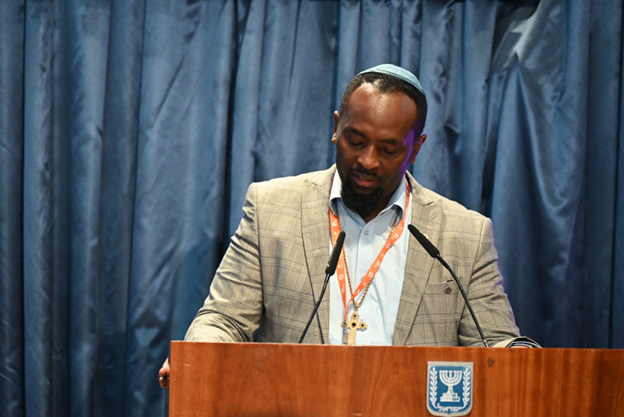
Dennis Nthumbi—the principal petitioner and a self-described Zionist—has expressed open hostility towards Islam and Muslims
The rapid expansion of the global halal industry has given rise to a new form of Islamophobia centered on halal certification. Across several countries, coordinated campaigns targeting halal-certified products have emerged, illustrating how anti-Muslim discourse is increasingly being directed at religious consumer practices.
One of the most common strategies employed by opponents of halal certification has been the use of legal challenges. Petitioners have argued that halal labeling infringes on consumer rights and compels non-Muslims to purchase or consume products associated with Islamic religious requirements.
Although halal certification bodies maintain that certification is a voluntary process designed to assure consumers seeking compliance with Islamic dietary requirements, opponents have advanced the argument that certification functions as a form of religious “tax” or levy. According to this claim, certification costs increase the prices of products for all consumers regardless of their faith.
This line of argument, which has been widely used by anti-halal campaigners in various parts of the world, forms one of the central pillars of the petition filed in the High Court by Dennis Nthumbi, Dennis Owuor Ochanda and Henry Barasa Tom. The petition, lodged before the Constitutional and Judicial Review Division of the High Court, seeks to end the practice of verifying food products for compliance with Islamic dietary laws.
While court documents state that the petition is not motivated by religion, Dennis Nthumbi—the principal petitioner and a self-described Zionist—has openly expressed hostility toward Islam and Muslims on social media. A review of his public posts reveals consistent opposition to matters associated with Islam, including the Qur’an, halal certification, madrasa education, Al-Aqsa Mosque, and the Palestinian cause.
One of his most vitriolic posts he has made is sharing comments that “Islam is an apocalyptic beast” and the Qur’an is replete with verses which sanction the killings of Christians, even going forward to state that there is a verse in the Qur’an “often called the sword verse.”
Despite Kenya’s longstanding emphasis on national cohesion, religious tolerance, and peaceful coexistence, Nthumbi has repeatedly advanced the claim that Muslims are engaged in the “systematic killing” of Christians in parts of the country. In one social media post, “A narrative taught in many mosques and successfully demonstrated in the systematic killings of Christian’s in the northern part of Kenya which according to them should exclusively be Islamic zone and home to Somalis only,” he said.
His rhetoric has frequently portrayed Islam as a growing threat to Kenya’s national identity. In one Facebook post, he claimed that “Kenya is becoming a hardcore Islamic nation,” adding that Muslims had allegedly expanded their influence into “the cities, the land, economic systems and food systems.” He further asserted that “everything in Kenya is almost halal” and accused the Church of failing to recognize what he described as a looming threat.
Nthumbi has also expressed opposition to the appointment of Muslim leaders to senior public positions. Following the nomination of then Court of Appeal Judge Mohamed Warsame to the Supreme Court by the Judicial Service Commission, he questioned the decision on social media, asking whether there was a “permanent post” on the Supreme Court reserved for Muslims.
Similarly, he criticized President William Ruto’s recent directive to integrate madrasa and duksi education into the national education system arguing that Kenya’s history of “Islamist terrorism” warranted heightened scrutiny. He questioned whether religious schools should receive formal state recognition and went further by challenging the very existence of madrasa institutions, asking: “Should madrassas exist?”
Join Our WhatsApp Channel for Updates and Announcements
Related


“Can Kenya regulate religious education strongly enough to protect national cohesion and security?” NO.
On social media, where he identifies himself as the Africa Director of the Israel Alliance Foundation, Nthumbi projects the image of a Christian Zionist—a movement that has embraced Judaic teachings into the Christian faith and actively supports the campaign of extermination against Palestinians to dispose them of their lands in the occupied territories. The campaign ultimately aims at the eventual destruction of the Al Aqsa Mosque, the third sacred site in Islam. “There’s nothing like West Bank! It’s Judea and Samaria. And It’s Jewish Land!,” he said in one of his posts on X.
Conversely, Nthumbi in his petition against halal certification has looked the other way when it came to Kosher certification, which requires the verification of food products, ingredients, and manufacturing processes to adhere strictly to Jewish dietary laws. In Kenya Kosher certification is undertaken by the Nairobi Synagogue and Kosher Kenya. Just like halal certified products, a number of consumer products in the country bear the Kosher label.
Moreover, Kenya hosts a wide range of certification systems that verify compliance with specific standards and requirements. These include ISO certifications, which assess conformity with internationally recognized standards for quality, safety, efficiency, and management systems established by the International Organization for Standardization.
In response to the petition, the Kenya Bureau of Halal Certification (KBHC), one of Africa’s notable halal certification agencies, applied to be enjoined in the proceedings noting that Muslims have a constitutional right to know which food and consumer products have been prepared in accordance with their religious beliefs.
“Muslims have a right to know which foods are prepared in accordance with their faith, just as Jews are entitled to know which foods are kosher. This is consistent with the provisions of Article 46 (Consumer Rights), as read together with Article 32(2) (Freedom of Religion) of the Constitution of Kenya, 2010,” the application states.
Beyond religious compliance, halal certification is increasingly recognized as a quality assurance mechanism. The certification process verifies that products are manufactured according to standards of hygiene, cleanliness, traceability, and ethical sourcing, attributes that appeal to a broad range of consumers beyond the Muslim community.
Globally, many companies—particularly export-oriented manufacturers—continue to pursue opportunities in lucrative halal markets across the Middle East, Southeast Asia, and member states of the Organisation of Islamic Cooperation (OIC). These markets form part of a vast halal economy valued at approximately US$2.6 trillion, which is projected to grow to US$3.56 trillion by 2029, driven by rising consumer demand.