OUR UNSUNG HEROES: Shariff Shibly, the father of formal education in Northern Kenya
Shariff Shibly, is regarded as the father of formal education in Northern Kenya and the pioneer of integrated Islamic education in contemporary Kenya
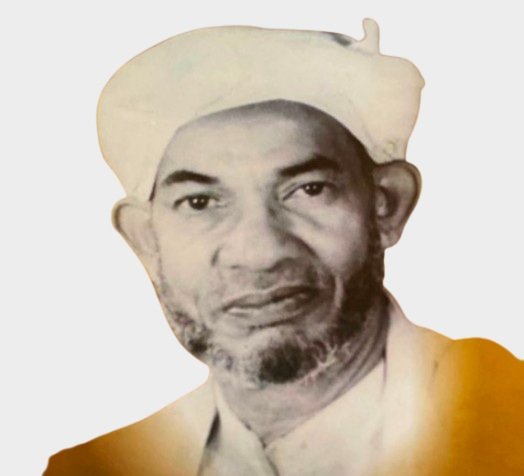
The history of formal education in Northern Kenya cannot be told without the name Shariff Shibly. A visionary religious scholar, educator and reformer, he fundamentally transformed the educational landscape of what was then known as the Northern Frontier District (NFD)—a vast, arid region that remained largely neglected during the colonial period.
Shariff Abubakar Omar Kullateyn, popularly known as Shariff Shibly, is regarded as the father of formal education in Northern Kenya and the pioneer of integrated Islamic education in contemporary Kenya. Although his extraordinary contribution has yet to receive the national recognition, he is acknowledge as the driving force behind the introduction of formal education in the former Northern Frontier District.
Education and the Colonial Challenge
The colonial era ushered in a new phase of educational development in Kenya. However, while Muslims had established vibrant centres of learning long before the arrival of European colonialists, the colonial administration entrusted the expansion of formal education primarily to Christian missionaries.
As missionary schools spread across the country, many Muslim communities were left behind. In many cases, Muslims were either discouraged from attending these schools or avoided them altogether because they feared that their children would be converted to Christianity. To many Muslim parents, taking a child to a missionary school was viewed as no different from taking them to church.
Consequently, colonial efforts to promote Western education in predominantly Muslim regions—including the Coast and Northern Kenya—met considerable resistance.
Faced with this challenge, the British colonial administration sought someone who possessed deep Islamic scholarship and could earn the confidence of the local Muslim population.
They looked to the island of Zanzibar where a bilateral arrangement was reached between the Government of Kenya and the Sultanate of Zanzibar—then one of East Africa's leading centres of Islamic scholarship—to secure the services of Shariff Shibly, a highly respected scholar who possessed advanced knowledge in both Islamic and secular education. He was recommended for deployment to the Northern Frontier District to introduce formal education in a manner that would respect the religious and cultural values of the local communities.
Establishing the First Schools
Upon arriving in Northern Kenya, Shariff Shibly quickly realised that the conventional day-school model was unsuitable for the region. The local people— Somali, Borana and Rendille communities were largely nomadic pastoralists who moved frequently in search of water and pasture for their livestock. Under such circumstances, regular school attendance was nearly impossible.
Rather than imposing an unsuitable education model, Shariff Shibly developed an innovative solution.
He pioneered the Low-Cost Boarding Primary School (LCBP) model, working closely with local elders and colonial administrators to establish safe, centrally located boarding schools where children could live, receive meals and continue learning even as their families migrated with their livestock.
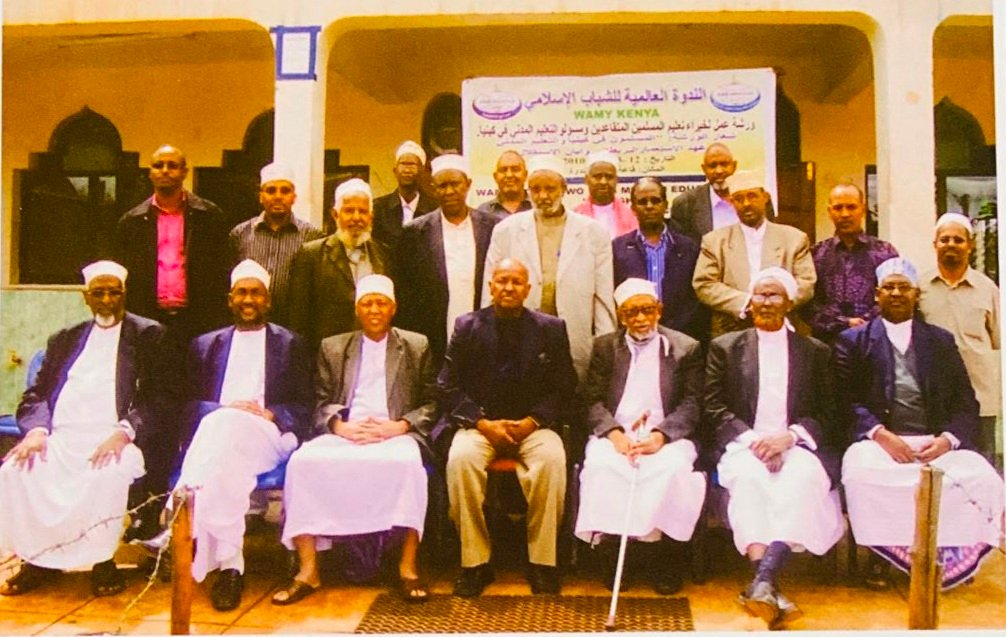
Notable educationists from various parts of the country who participated in documenting Sharrif Shibly's achievements in the education sector
His pioneering work marked several historic milestones.
In 1946, he established the first government primary school in the Northern Frontier District in Isiolo, the government African School (GAS) which officially opened on February 6, 1946 operating in two temporary grass-thatched rooms outside the District Commissioner’s office. A year later, he founded the first formal school in Garissa, followed by the first school in Wajir in 1948, laying the foundation for modern education in the region.
To encourage Muslim families to embrace formal education, Shariff Shibly designed a curriculum that integrated Islamic studies with secular subjects. Rather than relying on the colonial curriculum, he placed the Qur'an, Arabic language, Islamic morals and religious instruction at the heart of school life while also teaching English, Mathematics and other core academic subjects.
This innovative approach reassured parents that formal education would strengthen rather than weaken their children's Islamic identity.
The schools he established became the foundation upon which education later expanded across present-day Isiolo, Garissa, Wajir, Mandera and parts of Marsabit counties.
Related
A Visionary Ahead of His Time
Shariff Shibly's greatest achievement was not merely establishing schools—it was transforming public attitudes towards education.
As a respected Islamic scholar, he convinced Muslim parents that modern education and religious values were not mutually exclusive. His integrated education model demonstrated that children could excel academically without compromising their faith.
Long before integrated education became part of Kenya's national education policy, Shariff Shibly had already pioneered the concept in practice.
His educational philosophy rested on three enduring principles:
Education should strengthen rather than weaken Islamic identity.
Muslims should acquire modern knowledge without abandoning their religious values.
Schools should nurture leaders capable of serving both their communities and the nation.
By successfully blending Islamic and secular education, Shariff Shibly dramatically increased school enrolment and laid the foundation for what many scholars regard as the precursor to Kenya's modern integrated Islamic education system.
A Lasting Legacy
Today, thousands of professionals from Northern Kenya—including teachers, doctors, judges, civil servants, religious scholars and political leaders—can trace the roots of formal education in the region to the schools established through Shariff Shibly's pioneering efforts.
His work fundamentally changed public perceptions of education and opened doors of opportunity for generations of pastoralist communities that had previously remained outside the formal education system.
Many of the first students educated through the schools he established later became distinguished public servants and community leaders, helping shape the political, administrative and socio-economic development of Northern Kenya.
Why His Story Matters
Despite his immense contribution to Kenya's educational history, Shariff Shibly remains largely absent from mainstream historical narratives.
Yet his achievements rival those of many of the country's better-known education pioneers. He accomplished what many believed impossible: introducing modern education into a region where it had initially been viewed with deep suspicion while preserving the Islamic identity and cultural values of its people.
The Low-Cost Boarding Primary School model that Shariff Shibly introduced in the late 1940s continues to form the backbone of education strategies in Kenya's pastoralist and arid regions. Successive governments, together with development partners such as UNICEF, continue to rely on subsidised boarding schools to ensure that children from nomadic communities have access to quality basic education.
His enduring vision—that religious and secular education can be harmoniously integrated to produce knowledgeable, morally grounded and socially responsible citizens—continues to shape educational policy and practice across Northern Kenya today.
More than seven decades after he opened the region's first schools, Shariff Shibly's legacy lives on in every classroom, every graduate and every community that has benefited from the educational revolution he began. His story is not merely the history of one man, but the story of how education transformed an entire region.