How a Kwale Mosque became a symbol of interfaith trust
The Waa Jamia Mosque is a remarkable testament to how shared values can transcend religious boundaries.
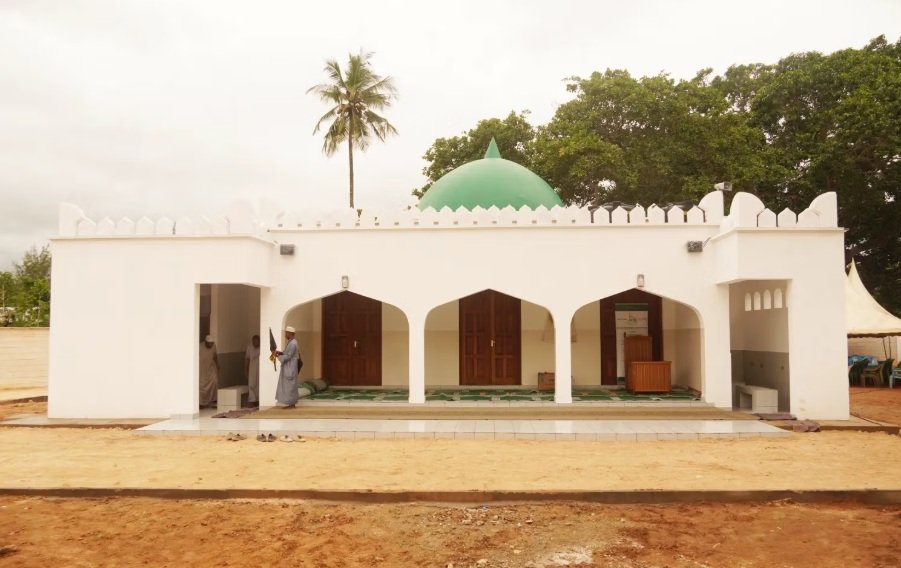
In the quiet coastal village of Waa in Kwale County stands a mosque whose story stretches across countries, faith traditions and generations. Built from the vision of an Ismaili woman, guided by a Hindu contractor and eventually entrusted to Kenya's largest Muslim institution, the Waa Jamia Mosque is a remarkable testament to how shared values can transcend religious boundaries.
The mosque, which was officially inaugurated on June 1, is expected to strengthen Islamic outreach in the area while serving as a catalyst for social and economic development among local residents.
Yet behind its elegant structure lies an extraordinary story that begins more than six decades ago and reaches as far as neighbouring Uganda and Canada.
The roots of the mosque can be traced to the life of Sakker Khanu, an Ismaili woman whose personal journey was intertwined with a chapter of East African history. In 1963, she wished to marry a Canadian national, Patrick Caddy. However, her faith community did not permit the marriage under the circumstances.
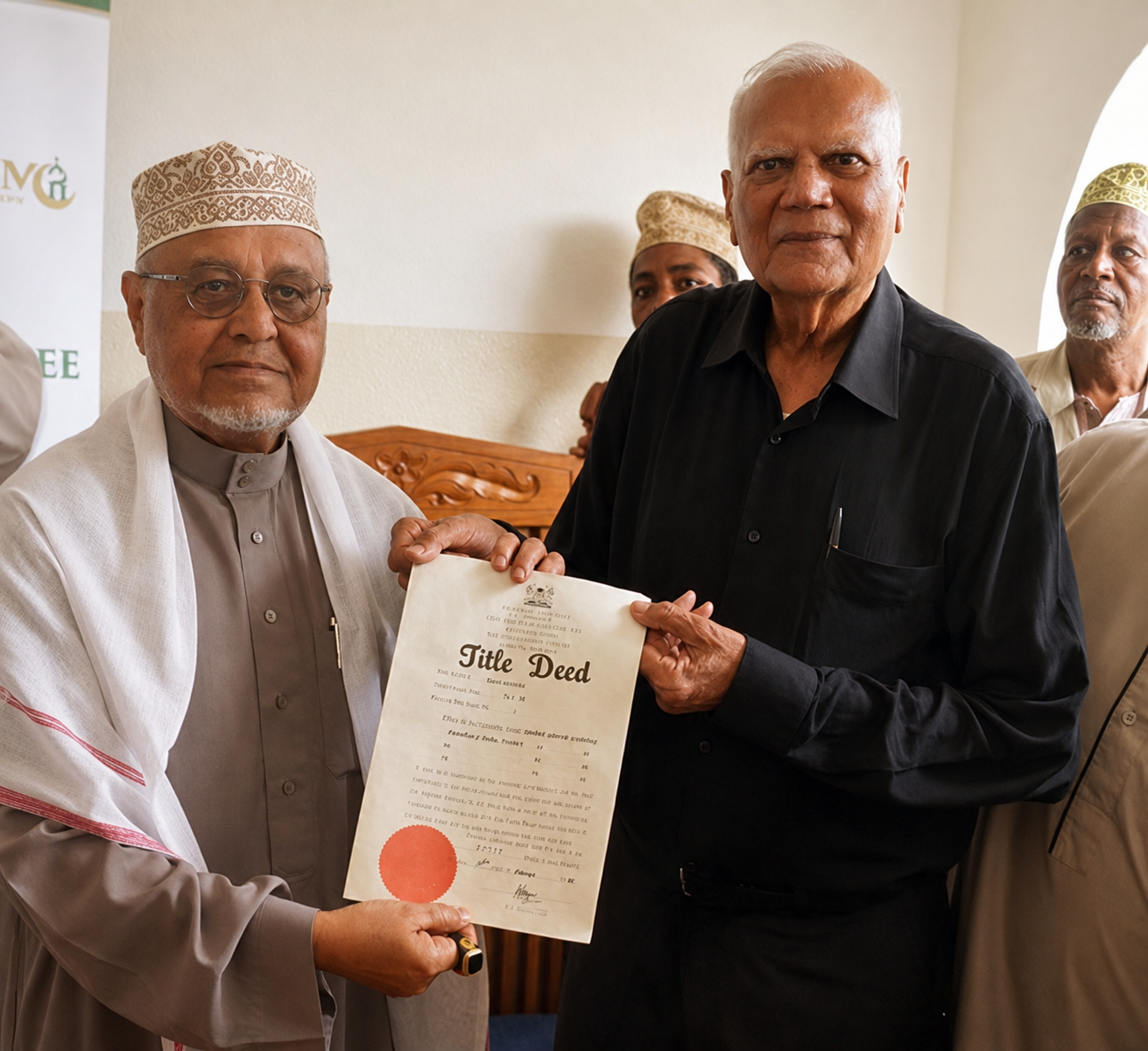
Mohamed Hussein Jafferali hands over the title deed to Jamia Mosque Secretary General Abul Bary Hamid
Determined to remain together, Sakker persuaded Patrick to embrace Islam. He reverted and the couple was married at Kibuli Mosque in Uganda under the guidance of Prince Badru Kakungulu, brother of Sir Edward Mutesa II, the Kabaka of the Kingdom of Buganda and Uganda's first president.
As the years passed, Patrick became deeply committed to his new faith and eventually encouraged his wife to embrace Sunni Islam. The couple later settled in Canada's British Columbia province, where they spent many years engaged in charitable work and community service.
Before her death in 2024, Sakker expressed a wish to establish a mosque and an orphanage on Kenya's coast.
Her brother, Mohamed Hussein Jafferali, took it upon himself to fulfil that dream.
He oversaw the construction of the mosque in Waa, but upon its completion faced an unexpected challenge. As an Ismaili, he did not have knowledge on managing a mosque and was uncertain which institution could effectively oversee its operations.
Seeking guidance, Jafferali turned to the Hindu contractor who had supervised the construction project. The contractor, equally unfamiliar with mosque administration, reached out to a friend who happened to be a member of the Jamia Mosque Committee in Nairobi.
Join Our WhatsApp Channel for Updates and Announcements
Related
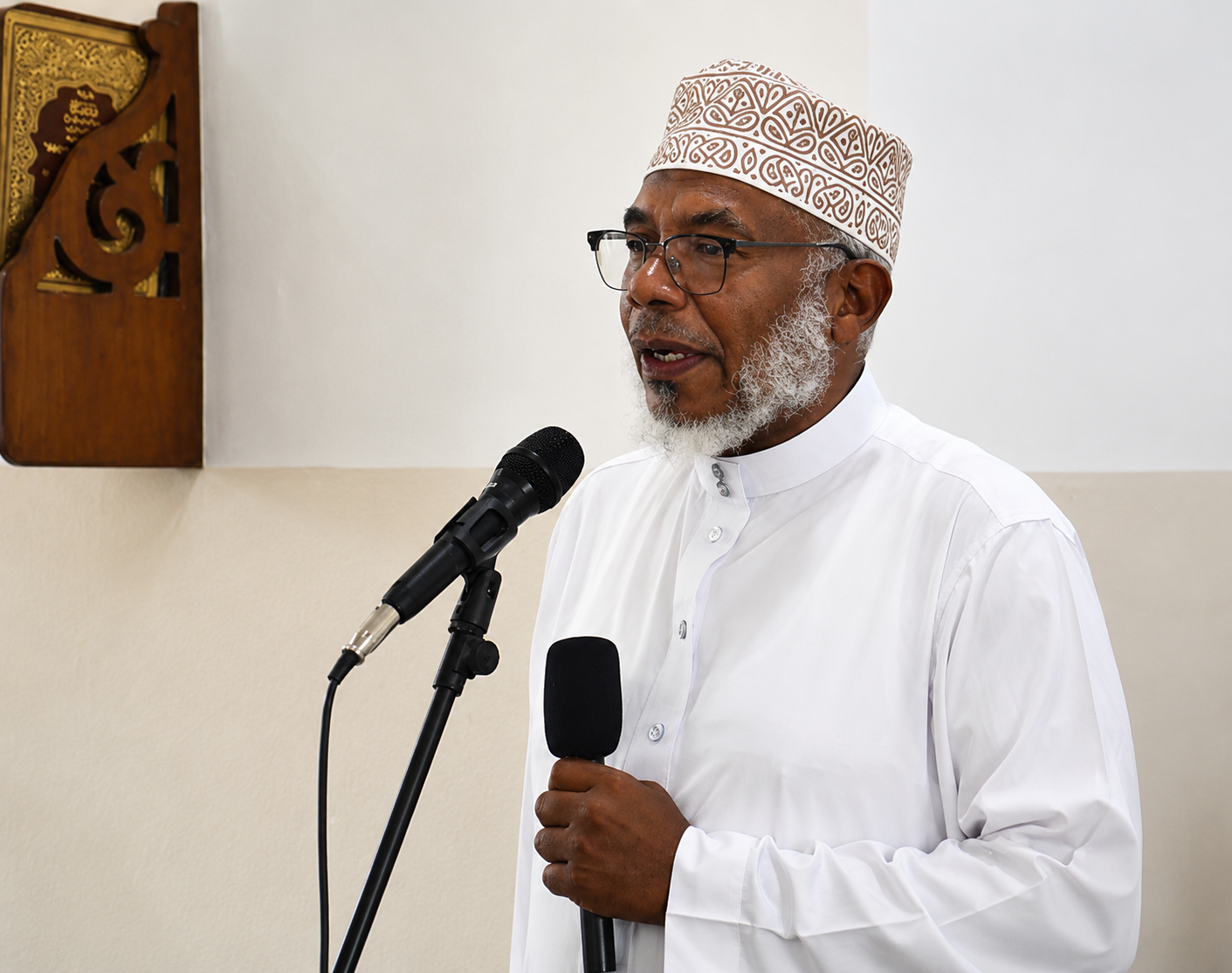
Jamia Mosque Vice chairman Abdullatif Essajee addresses the congregation during the hand over event
That seemingly chance connection would shape the mosque's future.
Through the referral, the facility was handed over to the Jamia Mosque Committee, placing it under the stewardship of one of the country's most established Islamic institutions.
Waa Jamia Mosque can accommodate up to 300 worshippers and sits on a two-acre parcel of land. The compound includes two boreholes—one serving the mosque and the other dedicated to the surrounding community.
The inauguration ceremony brought together officials from the Jamia Mosque Committee, members of Sakker's family, local residents and the contractor, all united in celebrating the realization of a dream years in the making.
“This mosque is the realization of a dream cherished by my late sister, Sakker Khanu,” Jafferali said during the ceremony. “She envisioned a place that would serve the spiritual needs of this community. Alhamdulillah, today we are witness to its fulfilment.”
Speaking on behalf of the Jamia Mosque Committee, Deputy Chairman Abdullatif Essajee thanked the donor's family for entrusting the institution with the management of the facility.
He assured worshippers that the committee would ensure the mosque's smooth operation while expanding its role beyond spiritual services.
Among the plans under consideration is the establishment of a centre designed to support families, promote religious education and strengthen community development initiatives.
For residents of Waa, the mosque is more than a place of worship. It is the culmination of one woman's vision, the dedication of a family determined to honour her memory and an unlikely collaboration between people of different faiths.
In an increasingly divided world, the story of Waa Jamia Mosque serves as a reminder that cooperation, trust and service to humanity can bridge religious differences and create lasting benefits for entire communities.