Eugene Mutuku's Death: A test of justice and humanity
The tragic death of Eugene Mutuku raises profound questions about the sanctity of human life, the moral state of our society, and whether we genuinely believe in God, death, and accountability on the Day of Judgment

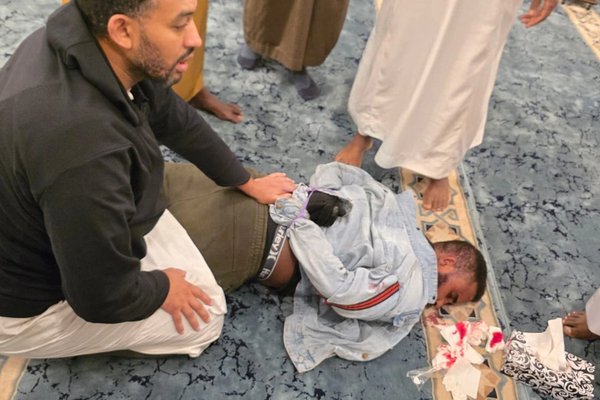
On June 6, 2026, Kenya woke up to a heartbreaking tragedy. A young and promising medical student, Eugene Mutuku, reportedly a final-year student, lost his life after allegedly being thrown from a moving public service vehicle along Thika Road and subsequently run over. According to media reports, the incident stemmed from a dispute involving a fare deficit amounting to less than one US dollar.
The tragic death of Eugene Mutuku raises profound questions about the sanctity of human life, the moral state of our society, and whether we genuinely believe in God, death, and accountability on the Day of Judgment. If we truly believed that every human being will stand before the Almighty to account for his or her actions, would such acts continue to occur with alarming frequency?
Islam regards the unlawful taking of human life as one of the gravest crimes. The Qur'an states: “Whoever kills a person—unless in retribution for murder or spreading corruption in the land—it is as if he has killed all mankind. And whoever saves a life, it is as if he has saved all mankind.” (Qur'an 5:32)
The Prophet Muhammad (peace be upon him) further emphasized the seriousness of murder, saying: “The destruction of the whole world is less significant before Allah than the unlawful killing of a believer.” (Sunan al-Nasa'i)
In another authentic narration, the Prophet (peace be upon him) said: “A believer remains within the scope of his religion as long as he does not unlawfully shed blood.” (Sahih al-Bukhari)
These teachings demonstrate that the preservation of human life is among the highest objectives of Islamic law and ethics.
Islamic law establishes a comprehensive framework aimed at deterring murder and protecting society. In cases of intentional homicide, three primary avenues exist:
1. Capital punishment (Qisas), where lawful retribution may be carried out.
2. Payment of blood compensation (Diya) to the victim's family.
3. Forgiveness, where the victim's family voluntarily pardons the offender.
The wisdom behind this framework lies not only in punishment but also in addressing the suffering of the victim's family. Blood compensation seeks to alleviate the financial burden often left behind, especially when the deceased was a breadwinner.
By contrast, under conventional criminal justice systems, offenders may serve lengthy prison sentences funded by taxpayers. While imprisonment is intended as a deterrent, critical questions remain: What tangible benefit does the victim's family receive? How are their losses compensated? Once released, the offender eventually rejoins society, while the victim's family continues to bear the emotional and economic consequences of their loss.
It may therefore be worthwhile for policymakers to explore mechanisms that ensure greater restitution for victims' families, including compensation schemes, asset forfeiture where appropriate, and enhanced accountability for institutions whose negligence contributes to preventable deaths.
The circumstances surrounding Eugene Mutuku's death are deeply disturbing. A young man with a promising future in medicine lost his life over a fare dispute involving an amount less than one US dollar.
This raises painful questions. Has human life become so cheap? What drives individuals to act with such apparent disregard for the consequences of their actions? Can a person in a sound state of mind knowingly eject another human being from a moving vehicle and not anticipate the likely outcome?
As a nation widely regarded as religious, Kenya is expected to demonstrate higher standards of moral conduct, compassion, and respect for human dignity. This tragedy should therefore serve as a wake-up call for religious institutions to reassess their role in promoting virtue, discouraging vice, and nurturing a culture of responsibility and empathy.
Equally troubling is the broader societal response. If we genuinely care for one another, where were the voices that could have intervened? Where was the collective sense of responsibility among fellow passengers?
This incident highlights a growing culture of individualism and indifference. In many urban areas, people witness robberies, assaults, and other forms of injustice yet choose to remain silent. Victims cry for help while bystanders continue with their daily routines as though nothing is happening.
A healthy society cannot thrive when citizens become mere spectators to the suffering of others.
This tragedy also reminds us of the state's obligation to provide safe, reliable, and dignified public transport systems. Across developed nations and many developing countries, governments maintain robust regulatory frameworks that prioritize passenger safety and hold operators accountable.
Related

The Prophet Muhammad (peace be upon him) said: “Each of you is a shepherd, and each of you is responsible for his flock.” (Sahih al-Bukhari and Sahih Muslim)
This principle applies not only to parents and community leaders but also to governments, regulators, transport operators, and all those entrusted with public responsibility.
The state has both a moral and legal obligation to safeguard the lives and property of its citizens. Economic empowerment is important, but it must be pursued through effective systems that uphold human dignity and prevent avoidable loss of life.
Why do such incidents continue to occur? One word provides a significant part of the answer: impunity.
Some public transport operators have become accustomed to reckless behaviour because previous offenders have not faced consequences severe enough to deter similar conduct. When punishment is inconsistent or perceived as ineffective, criminal behaviour risks becoming normalized.
As the Swahili proverb reminds us, "Penye nia kuna njia" — where there is a will, there is a way.
This case should therefore become a turning point. It should send a clear message that crimes against innocent citizens carry serious consequences and that human life must never be treated lightly.
Cases of murder and unlawful killings appear with disturbing frequency in our news headlines. Rarely does a day pass without reports of another life lost through violence. Where is our humanity? Do we still value the sanctity and dignity of life?
It is important to note that many of these crimes are committed not by the state but by ordinary citizens against fellow citizens. While governments must be held accountable where necessary, society must also engage in honest self-reflection.
Perhaps the deeper crisis is not merely political but moral. It is a crisis of values, attitudes, and character. The Qur'an reminds us: “Indeed, Allah will not change the condition of a people until they change what is within themselves.”(Qur'an 13:11)
Meaningful change begins with individual transformation. Prayers, conferences, and public declarations will have little impact unless accompanied by sincere efforts to reform our conduct and uphold justice.
Members of Parliament and relevant oversight institutions must ensure that existing public transport safety laws are fully implemented and enforced. Agencies tasked with protecting citizens must be held accountable for failures in regulation and enforcement.
This issue transcends politics. It is about the protection of human life, which is among the highest responsibilities of any civilized society.
Ultimately, every individual and institution will stand before God to account for their actions. Governments, regulators, transport operators, and ordinary citizens alike must reflect on a fundamental question: What answer shall we give when asked what we did to prevent injustice and protect innocent lives?
The Qur'an reminds us: “The Day when neither wealth nor children will benefit anyone, except one who comes to Allah with a sound heart.” (Qur'an 26:88–89)
Material success, political influence, and worldly status will be of no value on that Day. What will matter is whether we fulfilled our responsibilities, upheld justice, and protected the lives entrusted to our care.
The tragic death of Eugene Mutuku should not become just another headline that fades from public memory. It should inspire serious national reflection, meaningful reforms, and renewed commitment to the sanctity of human life.
As people of faith and conscience, we must ask ourselves honestly: Do we truly believe in God, death, and the Day of Judgment? If we do, then our actions must reflect that belief.
The commandment remains as relevant today as ever: “Thou shalt not kill.” (Exodus 20:13)
May justice prevail, and may such tragedies never be repeated.
Dr. Adam Khamis Mwamburi is a researcher, academician, and Member of Majlis Al Ulamaa (Council of Scholars), Jamia Mosque, Nairobi.